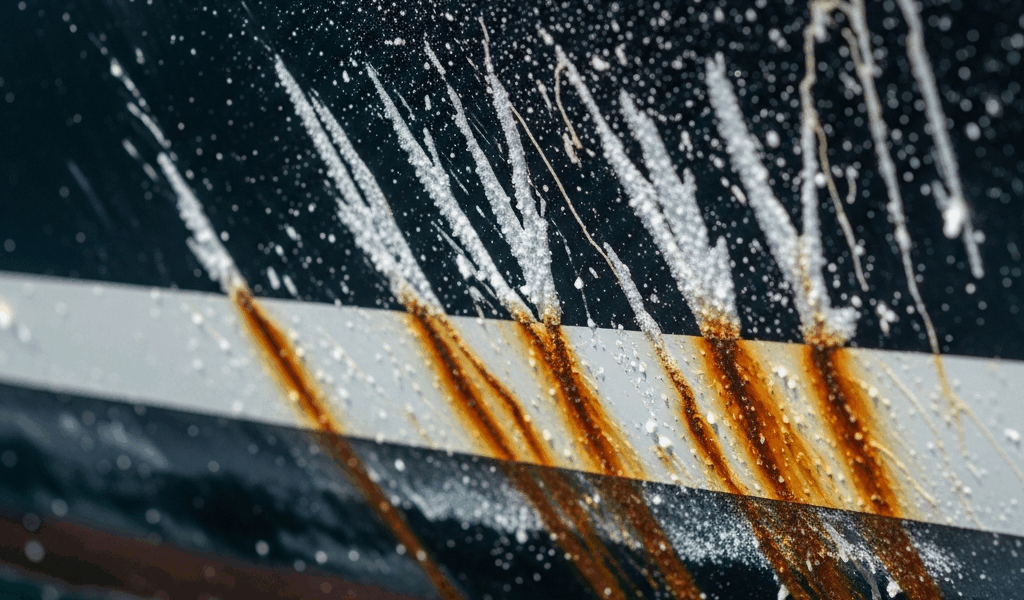
Where Corrosion Strikes First on 50ft Yachts
Corrosion on 50-foot motor yachts has gotten complicated with all the maintenance noise flying around. I’ve spent the last eight years working with owners who deal with saltwater damage, and I can tell you exactly where it destroys your boat if you’re not watching. It’s not random—it hits the same zones, in the same order, every single time.
The through-hull fittings are your first problem. On a 50-footer, you’ve typically got eight to twelve seawater through-hulls — galley intake, engine cooling, genset cooling, head discharge, shower drain. Each one is a tiny gateway for corrosion to tunnel inward. The fasteners holding these bronze or brass fittings? If they’re stainless steel (316 minimum, though some builders cheap out with 304), they’ll corrode faster than the fitting itself because of galvanic action between dissimilar metals.
Stainless steel hardware embedded in aluminum hulls is next. This is the 50ft curse, honestly. Pulpit bases, bow rail stanchions, antenna mounts — they’re bolted directly into aluminum stringers or deck beams. Saltwater seeps into those crevices, aluminum oxidizes aggressively, stainless tarnishes, and you get pitting corrosion that eats aluminum at an accelerated rate. I saw a Trawler 50 last year where the forward stanchion base had corroded through the aluminum in less than four years. The owner rinsed with freshwater once a month but never bothered cleaning salt spray residue from under the base. That’s the kind of mistake that costs you.
Your zinc anodes — they’re third on the list, though most owners don’t realize it. On a 50ft motor yacht, you need multiple anodes — typically one or two hull anodes (usually 1.5 to 3 pounds each), plus engine block zincs, seawater strainer zincs, and genset block zincs. Here’s the problem: your hull anode corrodes invisibly underwater. You can’t inspect it without hauling. By the time you discover it’s completely consumed, your aluminum hull is already paying the price.
Engine-room seawater piping is where corrosion gets expensive fast. The through-hull fitting feeds saltwater to your main engine raw-water intake, then to the genset, then possibly to a watermaker. Those hoses and the metal fittings inside them corrode from the inside out. Crevice corrosion forms under hose clamps where stagnant seawater sits, eating away at steel or copper tubing. On a 50-footer with a 250+ horsepower diesel, that raw-water pump is critical. Corrosion debris in those lines can restrict cooling flow and you won’t know it until you’re running hot.
Here’s why 50-footers are uniquely vulnerable: you’ve got enough displacement and equipment that builders mix materials freely. A 30-foot center console is mostly fiberglass and stainless. A 50ft trawler has aluminum stringers, stainless fasteners, bronze through-hulls, and steel engine beds all within feet of each other — all immersed or splashed by saltwater. The surface area is triple or more. The propeller shaft, shaft log, cutless bearing housing — all corrosion vectors. The complexity compounds the problem.
Saltwater Corrosion Types You’ll Actually See
Galvanic corrosion is what happens when two different metals touch in saltwater. Stainless bolts in an aluminum hull, for example. The aluminum is the “sacrificial” metal — it corrodes first to protect the stainless. But galvanic corrosion is fast. An unprotected stainless fastener in aluminum can create a corrosion cell that eats 0.1 inches of aluminum per year in the immediate vicinity. Scale that across a dozen fasteners, and you’re looking at serious pitting in 3–4 years.
Crevice corrosion is nastier because it’s hidden. It happens in tight spaces — under hose clamps, inside clogged strainers, at the edges of bolt holes where water gets trapped and oxygen depletes. The corrosion happens in the oxygen-starved crevice while the surrounding metal stays clean. I opened up a Mainship 50 cooling system where the raw-water pump inlet had crevice corrosion tunneling half an inch into the bronze casting. The owner had no idea until the pump started cavitating.
Pitting corrosion is what you see on stainless steel fasteners and fittings exposed to saltwater splash or immersion. Small pits form and grow inward, weakening the fastener locally. A stainless pulpit base bolt that’s been exposed to five years of salt spray can look fine on the surface but have pitting that reduces its strength by 20–30 percent. Worse — once a pit forms, it propagates. Stainless loses its passivity in these microscopic holes, and corrosion accelerates.
The difference between a 50ft aluminum-hulled trawler and a 50ft sportfish with a fiberglass hull matters here. Aluminum is anodic — it corrodes sacrificially when paired with stainless or bronze. Fiberglass hulls with stainless rails and bronze through-hulls are more forgiving because the hull itself doesn’t corrode. But a sportfish has a keel cooler, exhaust outlet, and propeller — all saltwater contact points. A trawler has continuous aluminum immersion, which means the corrosion problem is distributed across the entire hull structure, not just isolated hardware.
Prevention Tactics That Work Between Haul-Outs
Zinc anode replacement is non-negotiable. Hull anodes should be inspected every 12 months — every six months if you’re in high-salinity water (think Florida Keys or the Bahamas). The standard replacement interval for a 50ft motor yacht is 18–24 months of regular cruising, but that assumes moderate saltwater time. Heavy cruisers need replacement at 12 months. A single anode for a 50-footer runs $180–$350 depending on size and alloy. Neglecting this is penny-wise and pound-foolish. A corroded aluminum hull section costs $5,000–$15,000 to repair.
Barrier coating systems are your second line of defense. Epoxy barrier coatings on immersed aluminum — the wetted surface of the hull, the through-hull log, the shaft log area — slow corrosion dramatically. You don’t necessarily need a full hull paint job every year. Focus on high-velocity zones (bow area, propeller shaft), immersed fastener zones, and any areas showing surface corrosion. A professional two-part epoxy coating system costs $40–$80 per gallon and covers about 400 square feet per gallon. A 50-footer’s wetted surface is roughly 2,000–2,500 square feet, so a touch-up coating runs $200–$500 in materials annually if you’re doing it yourself between haul-outs.
Freshwater rinsing is tedious but essential — and I mean actually essential. Weekly freshwater spray applied to stainless hardware, aluminum deck areas, and through-hull fasteners. Once weekly during saltwater cruising, more often if you’re anchored in exposed positions. A saltwater rinse is worthless — it spreads the corrosion. Freshwater removes the chloride salts that initiate corrosion. Most 50-footers have onboard freshwater systems. Run the deck wash-down hose weekly. Budget 50–100 gallons per week. If you’re in a marina, use the saltwater hose first to rinse off accumulated salt, then switch to freshwater.
Engine-room ventilation reduces crevice corrosion in seawater lines. High humidity accelerates corrosion, especially in stagnant air. Run your engine-room blower for 30 minutes daily even if you’re not running the engines. Improves air circulation and reduces the condensation that collects on cooler piping and metal surfaces. Cost is minimal — just electricity and discipline.
Isolate dissimilar metals wherever possible. Use nylon or plastic spacers under stainless fasteners mounted in aluminum, wrap zinc-rich tape around stainless bolts before they contact aluminum, or switch to stainless fasteners throughout. Some owners use dielectric grease on fasteners to slow galvanic action, though freshwater rinsing is more reliable long-term. I’m apparently the type who forgets the grease half the time, and freshwater works for me while the grease never quite prevents what I want it to.
Inspection Checklist for Annual Surveyor Visits
Tell your surveyor to specifically examine the through-hull fittings from inside the boat. The exterior looks fine. It’s the fasteners, the backing plates, and the interior of the fitting that corrode first. Ask them to check for white or gray corrosion products (aluminum oxide) around the fasteners and any soft spots in the aluminum backing plate when they probe it.
Request visual inspection of all zinc anodes, even if they require pulling winterization plugs or removing strainers. A surveyor should weigh or photograph them to establish a baseline. If an anode is more than 50 percent consumed, replacement is overdue. If it’s already corroded away entirely, you’ve had no protection for months or years — the hull is your new sacrificial anode, and that’s a problem.
Have them trace the raw-water cooling lines from the through-hull fitting all the way to the engine intake manifold. Crevice corrosion under hose clamps is common. Look for white crusty deposits, pitting in visible sections, or soft corrosion in bronze fittings. If they find corrosion, demand a flow test or replacement before the season starts.
Stainless steel fasteners around the topsides warrant close examination. Pitting corrosion is often microscopic initially. A surveyor with a magnifying glass and proper lighting can spot early pitting on pulpit bases, rail stanchions, and antenna mounts. Mark any pitting locations for monitoring or replacement.
Ask about hull barrier coating condition. Any bare aluminum showing through the paint? Any chalking, bubbling, or delamination? These are signs the protective layer is failing and localized corrosion is likely underway. A surveyor should recommend recoating affected areas within the next haul-out.
Early warning signs appear 2–3 years before structural corrosion becomes obvious. Weeping water around through-hull fasteners. Soft spots in aluminum around stanchion bases when poked with a probe. Visible white corrosion deposits inside the engine room on seawater piping. Discoloration of hull paint in isolated spots — often indicates underlying galvanic action. None of these individually justify an emergency haul-out, but combined, they demand action before the next season.
When Corrosion Damage Requires Serious Money
A through-hull leak from corroded fasteners or fitting failure is your red-flag scenario. Water seeping into the interior around a fitting, especially near the engine room, demands immediate professional attention. Repair costs range from $500 (fastener replacement, resealing) to $3,000+ (through-hull replacement with aluminum backing plate repair). If you ignore it, water ingress accelerates structural corrosion and invites mold.
Structural aluminum corrosion — pitting or thinning of hull stringers, tank tops, or stringer webs — is the expensive one. A surveyor can measure corrosion depth with ultrasonic thickness testing. If corrosion penetrates more than 10 percent of the material thickness in a structural member, repair is urgent. A corroded stringer in a 50ft trawler can cost $8,000–$20,000 to cut out and replace, depending on the extent and location. Prevention is the only economical approach here.
Engine block corrosion — pitting or erosion inside the raw-water passages of the block — reduces cooling efficiency and eventually causes overheating. Diesel engine blocks cost $12,000–$25,000 to replace. You can’t repair pitting inside a water jacket. Early detection via temperature monitoring and trend analysis is critical. If your engine runs 10 degrees hotter than baseline, have a mechanic flush the cooling system and inspect the strainer for corrosion debris.
When it’s time to haul instead of just inspecting: If you’re seeing active corrosion, not just surface oxidation; if an anode is depleted and you haven’t hauled in over a year; if stainless fasteners show pitting and you’re planning another season of cruising. Haul annually if the boat is actively cruised in saltwater year-round. If it’s seasonal (3–4 months per year), hauling every 18 months is acceptable with rigorous inspection and freshwater rinsing between hauls.
A clean, corrected finish may also benefit from an appropriate marine ceramic coating, but coating does not replace anodes, bonding checks or freshwater rinsing.

Stay in the loop
Get the latest power and motor yacht central updates delivered to your inbox.