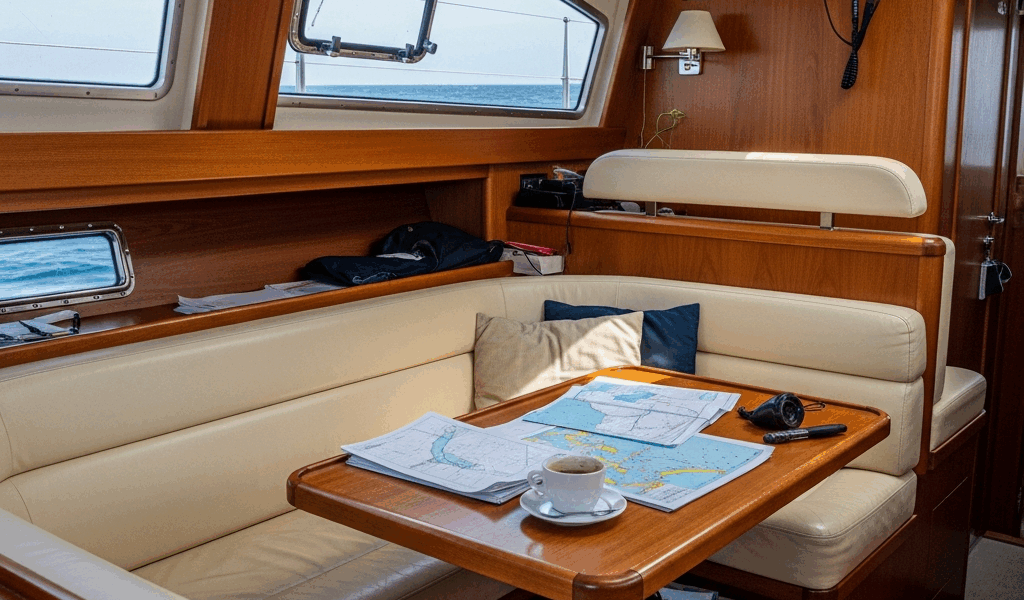
Finding a Ferretti 780 owner review that actually tells you what the brochure skips has gotten complicated with all the glossy marketing noise flying around. You’ll hear plenty about Italian craftsmanship and natural light flooding the salon. What you won’t hear is why your fuel consumption at 10 knots sits 18% over spec — or why the generator runs 14 hours a day at anchor when all you’re doing is running the air conditioning.
What Kind of Boat Is the Ferretti 780 Really
But what is the Ferretti 780? In essence, it’s a 78-foot upper-midrange motor yacht that splits the difference between full displacement comfort and performance cruising. But it’s much more than that.
It occupies a very specific slot — sitting above the 750, which honestly feels cramped for anything longer than an overnight run, and below the 800, which most buyers admit they can’t fully justify writing the check for. The 780 sleeps six in real comfort, runs the Mediterranean circuit without range anxiety, and fits eight people in the salon without anyone bumping elbows. That’s the sweet spot. That’s why people land here.
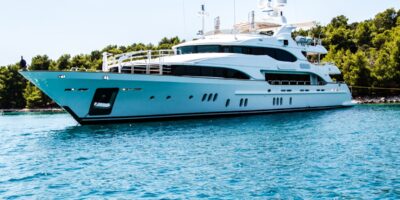
The buyer profile is pretty consistent. Semi-retired executives. Affluent families with teenagers. The occasional captain-run charter setup. This is not a floating condo and it’s not a sportfish — it’s built for weekend Mediterranean crossings, week-long Caribbean runs, and cockpit dinners for clients that don’t require renting out a waterfront restaurant. The competitive set includes the Princess S78, the Sunseeker 76, and the older Azimut 78, all clustering between $1.5M and $2.2M, all hunting the same buyer. That’s what makes the 780 endearing to us owners — it earns its place in that lineup on actual merit, not just badge value.
What Owners Say the Brochure Gets Right
Credit where it’s due. Ferretti actually delivers on three things without flinching.
Hull stability at cruise speed is legitimate. Running 12 to 15 knots in 2 to 3-foot seas, the boat holds a dead-level attitude without the trim tabs hunting constantly. That’s not brochure language — that’s the hard-chined hull and low aft generator placement doing actual work. You notice it most coming back from Corsica into a southwesterly chop. Other boats in the same size class are corkscrew-ing. The 780 just runs.
The master stateroom genuinely feels like a bedroom. Roughly 185 square feet, athwartship queen, walk-around layout on the starboard side. Marble threshold in the head. Separate shower enclosure. Small details, but after four consecutive weeks aboard, they stop being small. They’re the difference between a vacation and an endurance event.
Salon light is abundant — not marketing-abundant, actually abundant. The hardtop forward, the windshield glass, and the corner windows flood 2,400 square feet of interior with natural light that makes the space feel open rather than submarine-like. During day passages, you rarely flip on artificial lighting before 5 p.m. Subtle thing. Real thing.
The cockpit layout works, too. The L-shaped seating wraps around without blocking the transom door. The bimini covers the dining table but leaves the helm station exposed — a compromise that Ferretti nailed where plenty of competitors either bake the skipper or leave guests squinting into the sun.
The Parts That Surprise You After Delivery
Probably should have opened with this section, honestly.
Fuel consumption at 10 knots — the sweet spot for long-range cruising — comes in around 32 to 36 gallons per hour across both MTU 12V 2000 M96L engines combined. The dealer quoted 28 to 30 gph. That extra 4 to 8 gph sounds manageable until you realize it chews your 3,500-nautical-mile range down to roughly 2,800 nm in real conditions. Headwind, sea state, hull fouling, a full crew, 1,000 gallons of water aboard — all of it moves the needle. I learned this crossing from Antibes to Palma. Not on a builder’s trial run with fresh bottom paint, minimal fuel, and glassy water at 7 a.m.
At anchor, generator dependency is higher than almost any broker will tell you. The 780 carries two 30-kW units. One running at 50% load to supply the main AC burns roughly 2.8 gallons per hour. In the Caribbean with deck temps at 92°F and salon temps holding at 76°F, that generator does not rest. A full anchor day in summer heat burns 34 to 40 gallons. Run the numbers over a month — that’s 1,000 gallons of diesel just sitting still. Don’t make my mistake of not building this into your annual budget before signing anything.
Flybridge noise underway is a persistent surprise. The hardtop provides minimal sound dampening. The raw water pump whine, the turbo whistle at 1,800 rpm, the shaft bracket throb — it all transmits straight into the flybridge seating. Conversation at cruise speed requires a raised voice. The salon below is noticeably quieter, but the flybridge — the one Ferretti markets as the primary entertaining space — becomes borderline unusable once the engines turn over. Aftermarket sound-insulation panels run $12K to $18K installed and cut deck noise by roughly 6 to 8 decibels. Worth every dollar, in my opinion.
Engine bay access during maintenance is genuinely tight. Oil changes and fuel filter swaps require contortionist flexibility — specifically on the starboard engine, which sits inches from the hull with just enough clearance to work horizontally. I’m apparently narrow-shouldered and professional-mechanic-reliant, and hiring a marine tech at $185 per hour for tasks that should take 90 minutes but consume four hours never gets less painful. Plan for professional service on anything beyond basic housekeeping. Seriously.
Air conditioning performance in high humidity is adequate but not robust. The 780 ships with a 36,000-Btu salon system and a 12,000-Btu master cabin system. At 90°F and 85% humidity in the Caribbean, the salon holds 78°F only when both generators are online. The master stateroom drifts closer to 80°F. Sub-75°F comfort in the tropics demands both generators running or a third installed unit — another $22K investment that nobody pencils into the initial purchase conversation.
Running Costs the Dealer Quote Does Not Cover
So, without further ado, let’s dive into the numbers that will actually define your ownership experience.
Marina fees for a 78-footer at prime Mediterranean or Caribbean locations run $2,400 to $4,200 per month depending on season and destination. A full-season slip in Fort Lauderdale or Monaco runs $3,600 to $5,000 monthly. That’s $43K to $60K per year — non-negotiable, before you turn a key.
Antifouling cycle. The 780 should be hauled every 18 months for bottom service, paint, and surveyor inspection. Full haul-out, sandblasting, repriming, two coats of bottom paint — figure $28K to $42K depending on yard location. Annualized, that’s $18K to $28K sitting in your operating budget.
Stabilizer service. The Ferretti 780 carries a Naiad 4-ton system. Oil changes and seal inspections run $3,200 every 500 operating hours. At 400 annual cruising hours, you’re looking at $2,500 to $3,200 per year just for that system.
Canvas and upholstery degrade fast in salt environments — faster than most first-time owners expect. The bimini cover, cockpit cushions, and salon fabrics have a realistic lifespan of five to seven years in tropical or Mediterranean climates. Full soft-goods replacement runs $45K to $65K. Amortized, that’s $6,500 to $13K per year if you want the interior looking like it didn’t come off a charter boat that stopped being maintained in 2019.
Professional captain costs — if you run with one, which many owners do at this size — add $60K to $84K annually for salary, benefits, and rotation coverage. Owner-operators still need a professional deckhand for guest management and heavy operations. That’s another $35K to $50K annually.
Total realistic annual operating cost, excluding actual cruising fuel, sits between $95K and $150K. Add $18K to $28K for full insurance coverage. The brochure price is just the opening bid.
Who Should Buy It and Who Should Keep Looking
Frustrated by boats that promise range and deliver headaches, the 780 buyer typically arrives here after looking at four or five comparable 75-to-80-foot motor yachts using nothing but dealer sheets and a few YouTube walkthroughs — and then discovers the reality gap after delivery. This new category of better-informed owner has taken shape over the last several years and eventually evolved into the community of 780 enthusiasts who know and respect what this boat actually is, on its own terms.
While you won’t need a professional racing crew, you will need a handful of qualified people to run this boat properly. First, you should budget for a full-time professional captain — at least if you plan to cruise more than a few weeks per year and value your guests’ comfort and safety. A professional deckhand might be the best option for cost management, as the 780 requires consistent, knowledgeable maintenance. That is because the systems complexity — dual generators, Naiad stabilizers, twin MTU engines — is not owner-serviceable in any practical sense.
The 780 fits the buyer cruising 200 to 400 hours per year who entertains seriously and has no interest in standing night watches personally. Retired corporate executives. Families vacationing together for three consecutive weeks. Owners willing to hire crew because the boat’s complexity genuinely demands it.
It does not fit the buyer seeking liveaboard economy or minimal operational overhead. The real-world fuel and maintenance numbers simply don’t support that mission. If range-maximizing and fuel-minimizing are your priorities, look elsewhere — the 780’s real-world consumption figures work against you.
Comparing to the Sunseeker 76: the Sunseeker is faster and louder, the Ferretti is more stable and spacious. Comparing to the Princess S78: the Princess has a larger flybridge and slightly lower running costs, the Ferretti has better hull stability in a seaway. Neither comparison is wrong. It depends whether you’re optimizing for speed, entertaining space, or rough-water comfort.
The Ferretti 780 is a legitimate boat. It delivers on its core promises — stability, light, space, presence. But it costs more to operate than any brochure will tell you, and it demands professional handling to perform at the level the purchase price implies. Own it knowing all of that. Don’t own it hoping to somehow beat the economics.

Stay in the loop
Get the latest power and motor yacht central updates delivered to your inbox.