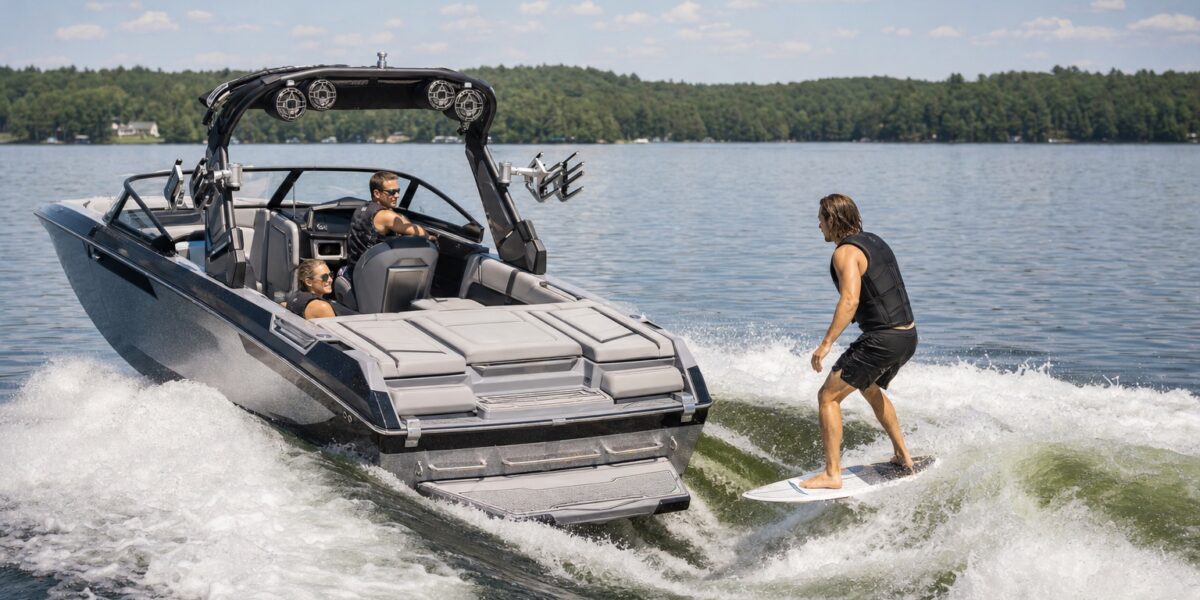
MasterCraft’s current wake-boat range is organized into four main families: NXT, XT, X and XStar. NXT is the accessible starting point, XT emphasizes multi-sport versatility, X moves toward premium surf performance, and XStar is the flagship. The correct choice depends on crew size, tow vehicle, storage, primary sport and the exact wave you prefer—not on brand reputation alone.
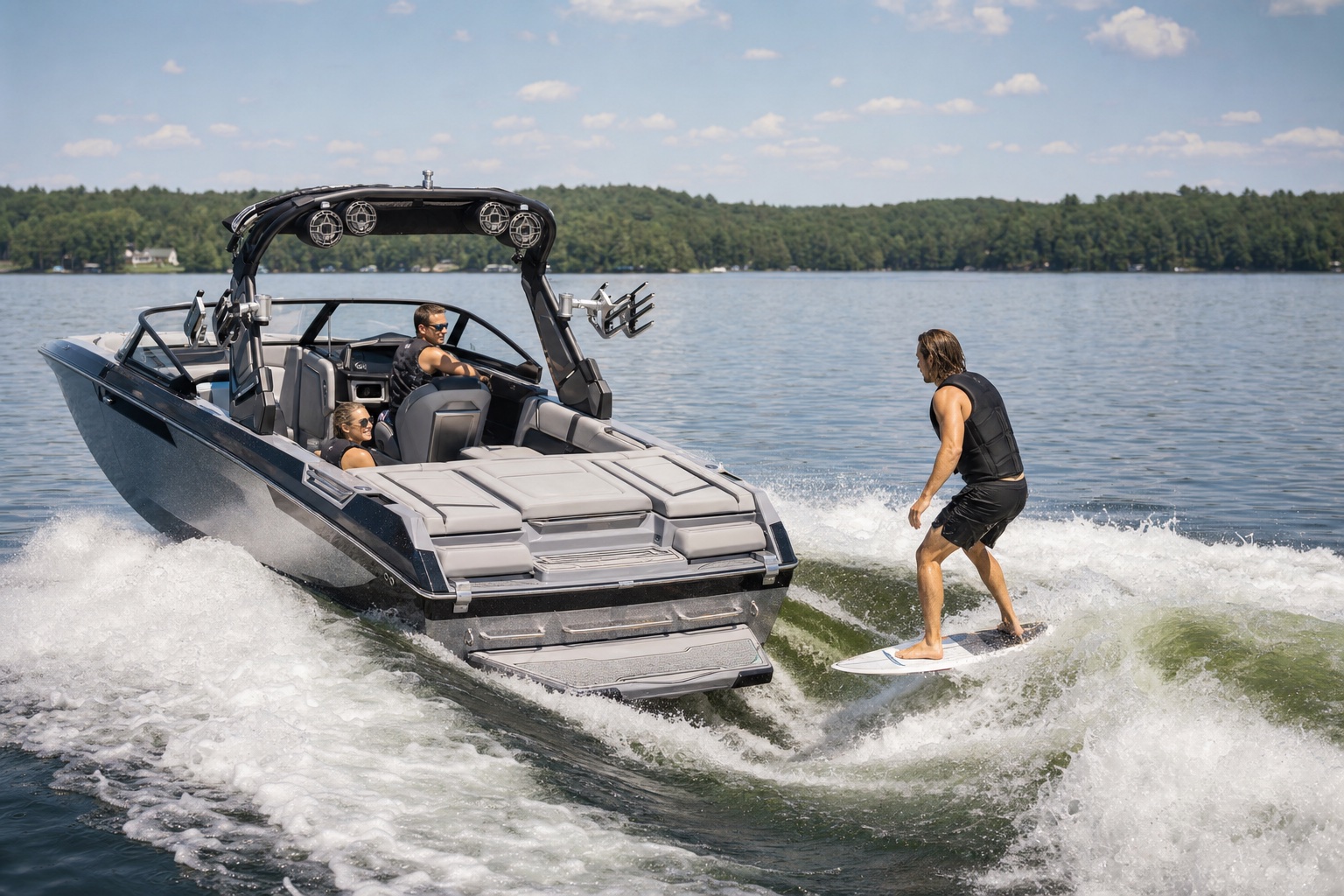
2026 MasterCraft wake-boat lineup
| Family | Current model range | Best starting point for | Important tradeoff |
|---|---|---|---|
| NXT | NXT20, NXT22, NXT23, NXT24 | Recreational families entering the brand | Fewer flagship features than X or XStar |
| XT | XT20, XT22T, XT22, XT23, XT24 | Multi-sport crews wanting flexibility | Options can materially change price and weight |
| X | Current X-family surf models | Premium wave performance and technology | Higher purchase, towing and ownership demands |
| XStar | XStar 23 and XStar 25 | Flagship surf performance and luxury | Size, 630-hp powertrain and premium complexity |
MasterCraft also builds the ProStar for tournament water skiing. It belongs in a ski-boat comparison, not as an automatic substitute for a surf-focused X or XStar. Verify the live lineup through the official NXT, XT, X and XStar family pages.
How to choose the right MasterCraft
Choose NXT when:
- you want the most accessible route into a current MasterCraft tow boat;
- recreational surf and wake performance matters more than flagship equipment;
- your crew prefers straightforward controls and a simpler option list;
- boat length and trailering limits point to the NXT20 or NXT22.
Choose XT when:
- your family switches among wakesurfing, wakeboarding, foiling, skiing and cruising;
- you want SurfStar with a broader crossover mission;
- crew capacity and storage matter as much as the wave;
- you need several lengths and layouts to fit a dock, lift or garage.
Choose X or XStar when:
- surf performance and premium helm technology are primary purchase reasons;
- the larger ballast, engine, battery and electronics systems fit your service budget;
- your tow vehicle, trailer route, launch and storage can handle the complete rig;
- you have tested the flagship wave against less expensive models with the same rider.
A useful benchmark: the 2026 XT23
MasterCraft’s current XT23 page provides a good example of how quickly size and systems add up. It lists a 23-foot-4-inch length, 102-inch beam, 16-person seating rating, 5,250-pound boat weight, 79-gallon fuel capacity, 3,450 pounds of ballast and 108 cubic feet of storage. SurfStar, a 12-inch screen, MyDrive, keyless ignition and a 5.3-liter GDI HO engine are listed as included; FastFill, DockStar, a stern thruster and a 6.2-liter GDI engine are options.
Those figures are not a recommendation to carry 16 people while fully ballasted. Passenger weight, gear, fuel and ballast interact with the capacity plate and operating conditions. Use only approved configurations and follow the model-year manual.
What SurfStar and ballast actually do
Ballast increases displacement so the hull moves more water. SurfStar hardware and software then shape the wave for the selected side and activity. The system can make setup more repeatable, but it does not replace correct speed, ballast distribution, crew placement, water depth and rider feedback.
The prior articles repeatedly called the old “Gen 2 Surf System” revolutionary and claimed instant competition-grade results from invented personal experience. MasterCraft’s current product pages use SurfStar terminology. A buyer should judge the present model and software rather than rely on old system names or promotional superlatives.
During a demo, test both surf sides with the same rider, crew and ballast. Check wave length, pocket, push, transition, wash and recovery after a turn. Then empty ballast and evaluate cruising ride, visibility, planing and low-speed control.
Price and ownership-cost questions
MasterCraft generally directs shoppers to request a quote rather than publishing one universal transaction price. Ask for an itemized document covering:
- model year, hull identification and exact Ilmor engine;
- standard versus optional SurfStar, FastFill, tower, audio, thruster and helm equipment;
- boat, trailer and estimated full-fuel weights;
- freight, preparation, tax, registration and documentation fees;
- cover, batteries, board racks, heater, storage and dealer-installed accessories;
- warranty registration, engine coverage and transfer conditions.
Annual costs can include insurance, fuel, storage, cleaning, winterization, oil and impeller service, ballast-pump care, batteries, trailer tires and brakes, upholstery care and dealer diagnostics. Premium audio and electronic systems add value only if you want them and can maintain them.
Tow vehicle, trailer and storage
Do not choose a tow vehicle from dry boat weight. MasterCraft’s 2026 trailer matrix shows that combined boat-and-trailer weights vary materially by model and wheel package. Add fuel, batteries, gear and passengers carried in the tow vehicle, then compare actual tongue weight, payload, gross vehicle weight, gross combined weight and hitch ratings.
Measure the folded tower height, trailer length, garage opening, lift capacity and water depth. Our trailer tire-pressure guide explains why the complete loaded rig and tire placard matter.
Maintenance and warranty
MasterCraft’s current owner resources call for safety-equipment and oil checks at 50-hour intervals, annual or 100-hour service, fuel-filter replacement, steering and cable inspection, engine-mount and fuel-system checks, fire-suppression inspection and impeller service. Some procedures should be performed by an authorized technician.
The factory also publishes a five-year/500-hour MasterCare warranty description and separate Ilmor engine coverage, with different terms for naturally aspirated and supercharged engines. Actual coverage, exclusions, registration and transfer requirements are controlled by the applicable warranty documents. Use the official warranty, service and manuals hub.
Storage and winterization depend on the engine, ballast, heater, shower and other installed systems. Pair our winterization checklist with the exact MasterCraft and Ilmor manuals.
Used MasterCraft inspection checklist
- Verify the model year, hull identification, engine serial number and option sheet.
- Review hours, engine diagnostics and documented 50-hour and annual services.
- Operate every ballast pump, valve, surf actuator, display, camera and audio zone.
- Inspect the propeller, shaft, strut, rudder, tracking fins and underwater gear for impact.
- Check the bilge, stringers, engine mounts, upholstery, tower and storage compartments.
- Inspect the matching trailer, brakes, bearings, tires, lights, bunks and corrosion.
- Confirm any remaining boat and engine warranty can actually transfer.
- Water-test the boat from cold start through surf setup and normal cruising.
When a MasterCraft may not be the right boat
A compact outboard deck boat can cost less to buy, tow and service for a family that mainly cruises or fishes. Our Bayliner Element guide covers that alternative. A jet runabout offers a different stern layout and propulsion system; see the Scarab guide.
If wakesurfing is the priority, compare MasterCraft with competing purpose-built boats using the same lake, rider, crew, ballast and budget. Brand loyalty cannot replace an on-water test.
MasterCraft wake boats FAQ
What is the cheapest MasterCraft wake-boat family?
NXT is positioned as the accessible entry family. Transaction prices vary by model, engine, options, dealer and region, so request an itemized quote.
What is the difference between NXT and XT?
NXT emphasizes easier entry and recreational wake performance. XT offers more crossover flexibility, available technology and configuration choices. Compare the exact lengths and standard equipment rather than assuming every XT is simply a larger NXT.
Is XStar the same as the X Series?
XStar is MasterCraft’s flagship family, currently represented by XStar 23 and XStar 25. It sits above the broader X family in equipment, power and positioning.
Can a MasterCraft wake boat water-ski?
Many can tow a skier, but a surf-focused hull and ballast setup is not the same as the flatter wake sought for tournament slalom. The ProStar is MasterCraft’s purpose-built ski model.
Can you wakesurf behind any boat?
No. Wakesurf only behind a boat designed for the activity, with the propeller safely under the hull and the manufacturer approving the use. Follow local law, the owner’s manual and trained-operator practices.
Bottom line: NXT is the practical entry, XT is the versatile middle, X is the premium performance step and XStar is the flagship. Choose by actual wave, crew, towing and ownership needs after an on-water comparison.


Stay in the loop
Get the latest power and motor yacht central updates delivered to your inbox.