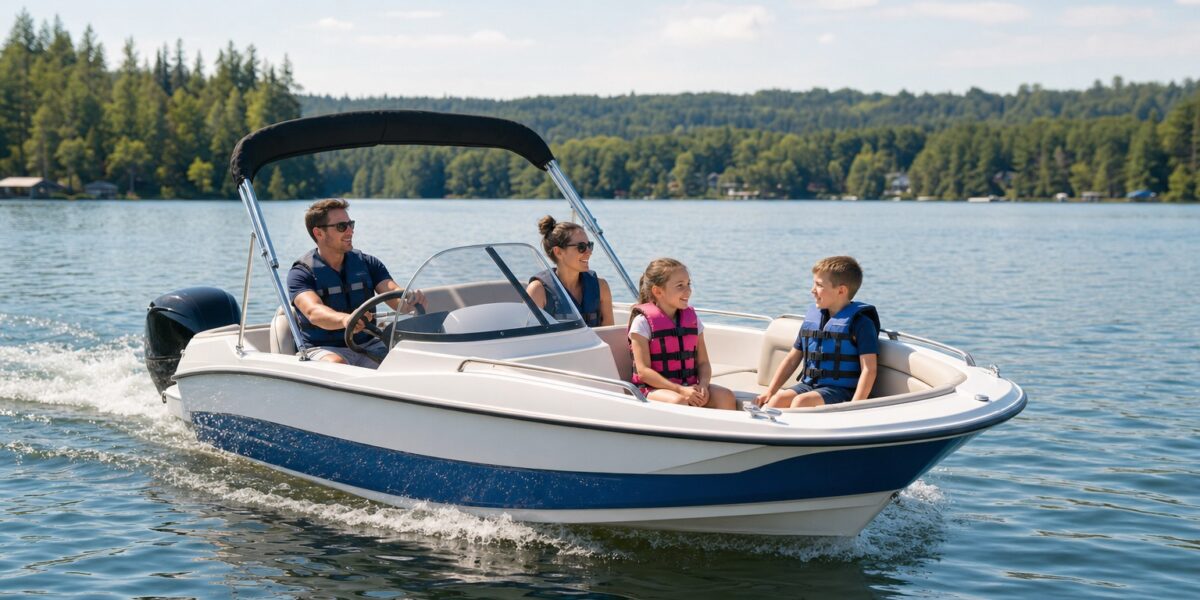
The current U.S. Bayliner Element family consists of the Element E16 and E18, alongside the closely related M17 deck boat. The E16 is the lowest-cost, easiest-to-store choice; the M17 adds a little length and capacity; and the E18 provides the most passenger room and horsepower of the three.
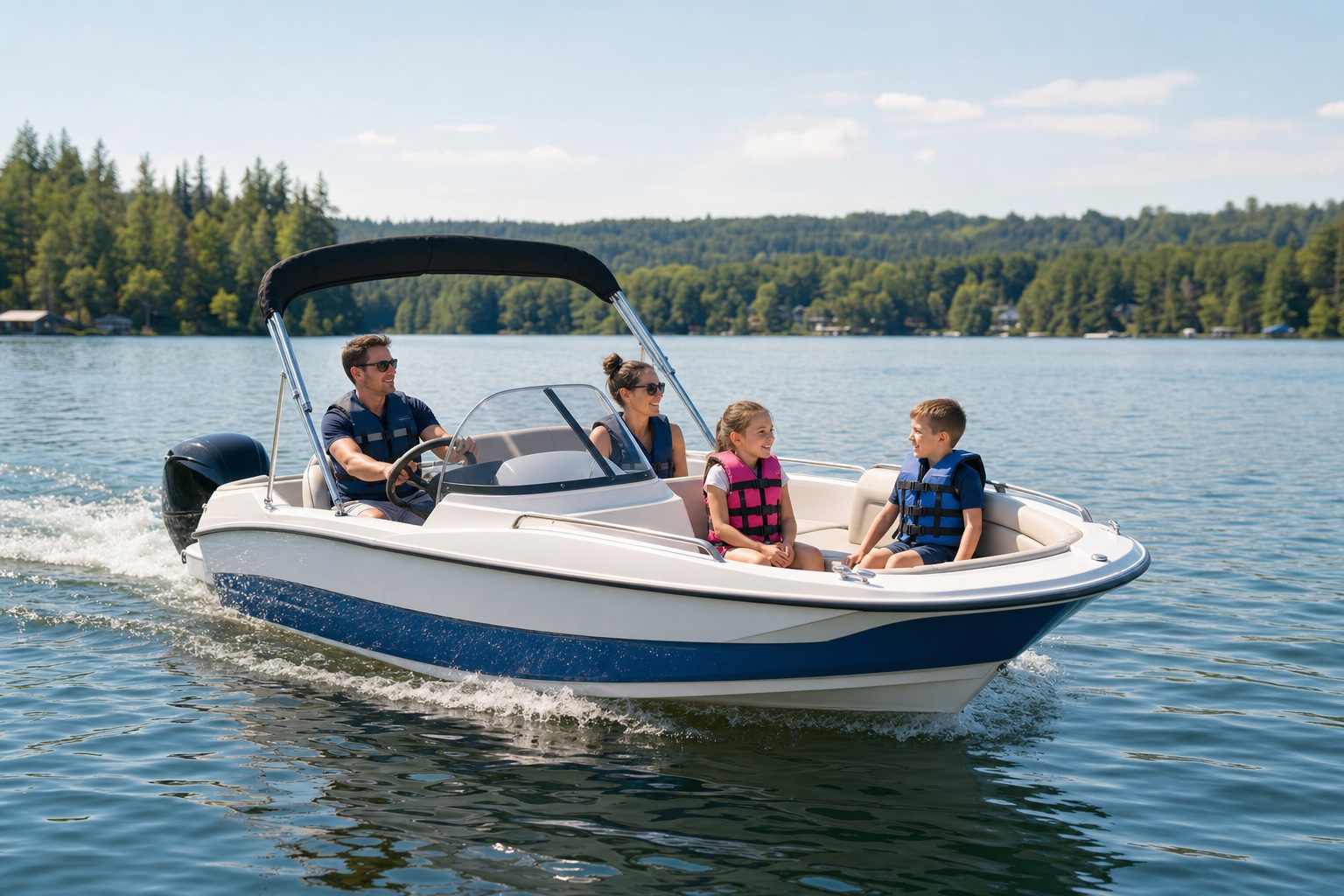
Current Bayliner Element models compared
These are the specifications and starting prices displayed on Bayliner’s U.S. pages on July 31, 2026. A website price is not an out-the-door quote. Engine choice, factory packages, trailer, freight, preparation, tax, registration and dealer fees can materially change the total.
| Model | Length | Maximum horsepower | Maximum people | Displayed starting price |
|---|---|---|---|---|
| Element E16 | 16 ft 2 in | 75 hp | 6 | $27,024 |
| M17 | 17 ft 0 in | 90 hp | 7 | $31,433 |
| Element E18 | 18 ft 2 in | 115 hp | 9 | $30,872 |
The M17 can appear at a different price on Bayliner’s model, promotion or build pages, illustrating why a dated dealer quote matters. Confirm the current model, engine and package through Bayliner’s official deck-boat lineup.
E16 vs M17 vs E18: which should you buy?
Choose the Element E16 when:
- garage length, tow weight and launch simplicity matter most;
- you normally carry two to four people, even though the capacity label allows up to six;
- cruising, casual fishing and light recreation matter more than loaded watersports performance;
- you want the lowest advertised entry price.
Choose the M17 when:
- you want a little more cockpit room without moving to the E18;
- seven-person rated capacity and up to 90 horsepower fit your real load;
- you prefer the M-Series layout or available packages after comparing them in person;
- your tow vehicle, garage and budget handle the full configured package.
Choose the Element E18 when:
- you regularly bring a larger family or more gear;
- up to 115 horsepower is valuable for loaded acceleration or tow sports;
- the nine-person capacity and extra length are worth the storage and towing increase;
- you verify that the trailer and selected engine are included in the written price.
Maximum capacity is a legal ceiling, not a comfort recommendation. People, coolers, fuel, safety gear and watersports equipment all consume space and payload. Sit in the exact boat with the crew size you expect to carry.
What the Bayliner M-Hull does
Bayliner describes the M-Hull foundation as stable, predictable and easy to handle. Its running surface and broad deck are intended to provide a reassuring platform for new boaters and families. That is useful at rest and during normal lake operation, but it does not erase the limits of a compact, relatively light deck boat.
The old article claimed the hull outperformed comparable V-hulls in chop based on invented first-person experience. That is not a responsible buying conclusion. A flatter, stability-oriented hull may pound or slap as waves build, while a deeper V can trade some at-rest stability for a softer rough-water entry. Test the boat in conditions similar to where you will use it, and slow down as conditions change.
Engine choice and real-world load
Do not choose horsepower from the maximum number alone. Ask the dealer for the performance bulletin or test data matching the exact hull, engine and propeller. A boat carrying two adults can plane differently from the same boat with six people, a full tank, a cooler and a tube.
For casual cruising, a lower-output package may reduce purchase cost. For frequent tow sports or heavy passenger loads, more horsepower may improve planing and throttle reserve. Propeller selection, engine mounting, weight distribution and altitude also affect performance. Never exceed the capacity plate or install an unapproved engine.
What the advertised price leaves out
Request an itemized out-the-door quote that identifies:
- model year, hull identification and exact Mercury engine;
- factory package, electronics, bimini, cover and watersports equipment;
- trailer model, brakes and destination or freight charge;
- dealer preparation, battery and commissioning fees;
- sales tax, title and registration;
- warranty terms and any promotional financing assumptions.
Insurance, storage, fuel, annual service, winterization and trailer maintenance continue after purchase. The least expensive boat is not the least expensive ownership plan if it requires a storage change or immediate engine upgrade.
Cruising, fishing and tow sports
The open deck and outboard layout support family cruising and casual fishing. For fishing, check whether the selected package includes the seating, livewell, rod storage or electronics you actually need; the Element is not automatically equipped like Bayliner’s Trophy fishing models.
For tubing or wakeboarding, confirm the approved tow point, observer seating and engine package. Compact deck boats can support recreational towing, but they are not purpose-built surf boats with ballast and a specialized wake system. Compare a dedicated wake-boat purchase separately rather than expecting an Element to produce the same wake.
Maintenance and warranty
Bayliner directs owners to the exact boat, engine and accessory manuals. Current factory guidance recommends a regular service schedule, pre-trip oil and system checks, correct fuel, manual-compliant flushing after dirty or salt water and professional end-of-season preparation. Mild soap and a soft brush are safer for gelcoat and vinyl than harsh cleaners or high-pressure washing.
Bayliner’s published warranty page currently describes a lifetime limited transferable hull warranty, five-year limited deck warranty, one-year parts and components warranty and two-year limited Mercury engine warranty for qualifying Element, bowrider, Trophy and deck-boat models. Coverage has conditions and exclusions, so read the actual warranty for the boat you buy. Use the official documents and manuals and warranty page.
Our winterization guide provides a planning checklist, while the Mercury and Bayliner manuals control the actual procedures.
Used Bayliner Element checklist
- Verify the model year, hull identification, engine serial number and capacity plate.
- Compare the boat with the correct model-year manual; older E21, M15 or M19 references may not match today’s U.S. lineup.
- Review engine hours, annual service, impeller and lower-unit records, and winterization history.
- Inspect the hull, transom, deck, fittings and upholstery for impact, stress, water intrusion or neglected repairs.
- Check steering, shifting, bilge pump, navigation lights, battery, electronics and every accessory.
- Inspect the trailer’s tires, date codes, bearings, brakes, lights and bunks.
- Run the boat on the water with a realistic load and obtain a professional inspection when condition is uncertain.
Bayliner Element FAQ
Is the Bayliner Element still made?
Yes. Bayliner’s current U.S. deck-boat pages list the Element E16 and Element E18. The M17 uses the same broader M-Hull family concept and occupies the size gap between them.
What is the cheapest Bayliner Element?
On July 31, 2026, Bayliner’s U.S. pages displayed the Element E16 at the lowest starting price of the three compared models. Dealer and package pricing can change.
Can a Bayliner Element go in salt water?
Saltwater use requires diligent rinsing, engine flushing and corrosion prevention according to the exact manuals. Trailer hardware and storage practices also matter. Ask the dealer whether the selected package is appropriate for repeated saltwater use.
Can the Element pull a tube?
An appropriately powered and equipped Element can support recreational towing. Follow the approved tow-point, passenger, observer and local-law requirements, and choose horsepower for the loaded boat rather than an empty demonstration.
Is the Bayliner Element an offshore boat?
It is best understood as a compact family deck boat for inland and protected waters. Weather, waves, loading and operator judgment always control whether a trip is safe.
Bottom line: The E16 wins on compact simplicity, the M17 provides a middle size, and the E18 offers the most capacity and horsepower. Compare the exact package, test it with a realistic load and buy from an itemized out-the-door quote.
If dedicated wakesurfing replaces general family cruising as the priority, compare the current NXT, XT, X and XStar families in our MasterCraft wake-boat guide.


Stay in the loop
Get the latest power and motor yacht central updates delivered to your inbox.