
Marine Survey Red Flags on Used Motor Yachts
I’ve sat through forty-three marine surveys over the past eight years, mostly watching my surveyors crawl through engine compartments with magnifying glasses while I held my breath over six-figure purchase decisions. That’s how I learned what actually matters during a pre-purchase inspection versus what buyers obsess over needlessly. The red flags that drain wallets post-purchase aren’t always dramatic — they’re the ones surveyors quietly photograph at 2 PM on a Tuesday, the ones that make you realize the 65-footer you thought was a bargain just became a financial anchor.
So, without further ado, let’s dive in. If you’re hunting for a used motor yacht between 40 and 80 feet, knowing which survey findings are deal-killers versus negotiable repairs will save you hundreds of thousands in unexpected costs. Honestly, this distinction separates buyers who walk away whole from those who get blindsided six months into ownership.
Engine Room Decay Patterns Surveyors Target First
The engine room is where surveys either calm your nerves or trigger your worst nightmare. I’ve watched surveyors spend thirty minutes on cosmetics and two hours photographing the diesel engine’s skin. That imbalance tells you something.
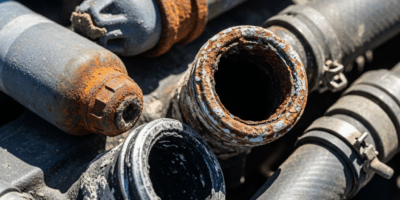
Corrosion patterns on a marine diesel tell a specific story — one that experienced surveyors read like a book. Active white-green corrosion on aluminum components, heat exchangers, oil coolers, freshwater manifolds — this means the cooling system is actively oxidizing. This isn’t cosmetic. A surveyor flagging this will estimate replacement costs. For a 60-foot motor yacht with twin Caterpillar C-32 diesels, I watched a buyer receive a repair estimate of $28,000 just to replace both heat exchangers and install new zinc anodes throughout the system. The yacht was listed at $895,000. Do the math on that one.
Zinc anode neglect is the clearest sign of deferred maintenance you’ll find. These sacrificial metals should be replaced every 2-3 years in saltwater. If the existing anodes are pitted down to 30% of their original size, the surveyor knows every aluminum through-hull fitting, strainer, and cooling component is next. I’ve seen buyers negotiate $15,000 price reductions based solely on anode replacement projections — and those were successful negotiations.
Through-hull fittings deserve scrutiny that casual inspections never provide. A 70-foot motor yacht typically has 12-18 seacocks depending on systems integration. Each one represents a potential sinking point. Surveyors probe these with picks and measure corrosion thickness. Bronze fittings showing white crystalline deposits mean dezincification has begun — the zinc is leaching out, leaving brittle, porous metal behind. Replacing a corroded seacock runs $1,200-$2,800 per fitting, including installation labor. Multiply that across multiple fittings and suddenly you’re looking at a five-figure commitment.
Engine oil analysis from the last service? This matters more than visual inspection alone. Clean oil signals good news. Black, gritty oil means worn rings or bearing surfaces — the kind of damage that surfaces as expensive problems later. A surveyor requesting a complete oil analysis is protecting you from future heartbreak. I learned this the hard way, honestly — skipped that step on my first yacht and discovered ring wear six months later.
Hull and Structural Issues That Look Minor But Aren’t
Osmotic blistering is the term that makes yacht buyers go pale. These water-filled bubbles appear in the gelcoat and underlying fiberglass when the hull absorbs moisture over years or decades. A 50-foot motor yacht might show thirty scattered blisters; a surveyor will note them as “minor surface defects” or escalate them as a “structural integrity concern” depending on depth and distribution. The difference between those two assessments is tens of thousands of dollars.
Here’s what buyers misunderstand: a handful of blisters isn’t automatically a disaster. But blisters clustered in specific zones — particularly below the waterline amidships or near the keel — suggest systemic moisture penetration. Addressing this properly means removing the damaged gelcoat, drying the substrate, and reapplying. For a 65-foot motor yacht, that’s $18,000-$35,000 depending on blister density and depth. That’s real money.
Stress cracks near the keel-to-hull bond are different animals entirely. These aren’t cosmetic. They indicate flexing stresses or impact history — the kind of structural insult that compounds over time. A surveyor measuring crack length and photographing from multiple angles is documenting whether the hull’s basic structural integrity is compromised. Walk toward the table when you see this notation. Repairs involve epoxy injection, potential internal reinforcement, and months of monitoring. One 72-footer I surveyed quoted $45,000 just to address three radiating stress cracks near the prop shaft tube. That’s one finding.
Water intrusion into stringers — the internal longitudinal reinforcement beams — appears as dark staining on cabin sole or soft spots when pressure-tested. This means moisture has migrated into spaces designed to be dry. Once water lives in stringers, rot follows inevitably. Addressing this often requires cutting access panels, applying marine epoxy, and allowing cure time that conflicts with listing schedules. I’ve seen this finding kill deals outright because buyers couldn’t stomach the timeline uncertainty.
When the surveyor finds soft spots in the cabin sole, they’re testing structural wood or plywood cores. A hard tap should sound crisp; a soft thud means delamination or rot. On a 60-footer, replacing a rotted cabin sole section runs $8,000-$15,000 because it’s rarely just one section — water spreads like it owns the place.
Electrical and Generator Systems That Tank Resale Value
Battery banks older than five years show up on surveys as “original” or “replaced 2019” — a detail that makes buyers either comfortable or concerned. Lithium systems are becoming standard on modern yachts; finding a 2015 65-footer still running 400 amp-hour lead-acid batteries means you’re looking at replacement within two years. That’s $18,000-$28,000 for a quality lithium system with proper management electronics, plus removal and disposal fees for the old battery cores. The timeline matters too — you’ll need upland time to install it.
Wiring degradation gets documented in detail on serious surveys. Surveyors pull panels and photograph brittle wiring insulation, corroded breaker contacts, and amateur splices that make you cringe. A 70-foot motor yacht with questionable wiring creates cascading risk — electrical fires, generator shutdown mid-crossing, navigation system failures cascading from one problem to the next. I watched one surveyor recommend complete rewiring of the main distribution panel and all circuits serving engines and critical systems. Cost estimate: $38,000 plus four weeks of labor. The boat sold for $22,000 less than comparable models with updated systems.
Generator reliability depends on hours since last overhaul and maintenance records. A genset with 8,000-plus hours needs inspection-port work. Black smoke during startup, fuel leaks, or coolant seepage all suggest imminent overhaul. A Caterpillar C-7 generator rebuild runs $12,000-$18,000 labor plus parts. That’s not a negotiable cost; it’s a certainty waiting to happen.
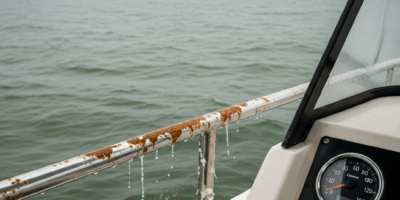
Shore power connections and galvanic isolation systems prevent corrosion from occurring when the yacht is docked. A surveyor testing shore power isolation with a multimeter is verifying whether deadly voltage is potentially present on the hull. Faulty isolation creates real electrolysis risk — the kind that eats through through-hull fittings. Replacing an isolation transformer costs $3,500-$7,000.
Propulsion and Drive System Red Flags by Boat Size
Shaft alignment failure shows up as excessive vibration or elevated bearing temperatures. A 40-to-60-foot motor yacht misalignment costs $4,000-$8,000 to correct. A 65-to-80-footer with twin or triple shafts runs $10,000-$16,000. The surveyor measures shaft runout using dial indicators; deviation beyond 0.015 inches requires realignment. That’s precise work.
Propeller damage history matters more than current cosmetic condition. A replaced prop that was damaged by struck submerged object suggests impact stress throughout the drivetrain. Internal damage to transmissions or thrust bearings might not appear until months of operation — when you’re underway and far from a facility. A surveyor noting “propeller replaced 2022, impact damage history per previous documentation” is flagging that the drivetrain endured trauma.
Transmission oil condition separates well-maintained yachts from ones heading toward catastrophe. Dark, burnt-smelling transmission fluid means heat cycling without adequate cooling or overdue service. On a 60-footer with twin Allison transmissions, full fluid and filter replacement costs $2,200. Full rebuild of both transmissions costs $28,000-$35,000. Probably should have opened with this section, honestly — transmission failure is expensive compared to most repairs.
Larger yachts (60-80 feet) with variable-pitch propellers introduce additional complexity that smaller boat owners never encounter. The hydraulic systems controlling pitch require specialized knowledge. A surveyor recommending hydraulic system overhaul is suggesting $6,000-$14,000 for a single propeller system.
The Post-Survey Negotiation Blueprint
Not all red flags justify equal price reductions. Surveyors document findings; they don’t dictate negotiation strategy. That’s your job.
Engine room issues that are seller responsibility include deferred maintenance — corroded anodes, depleted oils, clogged strainers. The surveyor’s cost estimates become your negotiation baseline. If the estimate is $28,000 for heat exchangers and zinc replacement, reasonable sellers absorb $15,000-$20,000 of that. Cosmetic corrosion without functional impact? Typically buyer responsibility post-closing.
Structural findings are different animals entirely. Stress cracks, water intrusion, blistering affecting integrity — these predate the current listing. Sellers should remediate or reduce price substantially. I negotiated $65,000 off a 72-footer based on structural findings; the seller chose price reduction over repairs. That was the smarter call for everyone involved.
Systems findings depend on vessel age and stated condition. A 2006 motor yacht with original batteries and generators? That’s disclosed age-related wear. The seller isn’t responsible. But a battery bank failing mid-survey when listed as “recently serviced”? Seller responsibility, and documentation matters. Request service records.
Walk away from deals where multiple red flags cluster in ways that suggest systemic deferred maintenance. One finding is negotiable. Five findings across engines, hull, and systems means the yacht was operated on a starvation budget. Future costs multiply unpredictably. Don’t make my mistake — I almost bought a 68-footer with six separate findings and dodged a financial disaster.
Armed with specific cost data and an understanding of where responsibility lies, you’ll negotiate smarter surveys and make purchase decisions with eyes wide open.
A used power catamaran needs model-specific dimensional, systems and sea-trial checks in addition to a survey; see our Aquila catamaran buying guide.


Stay in the loop
Get the latest power and motor yacht central updates delivered to your inbox.