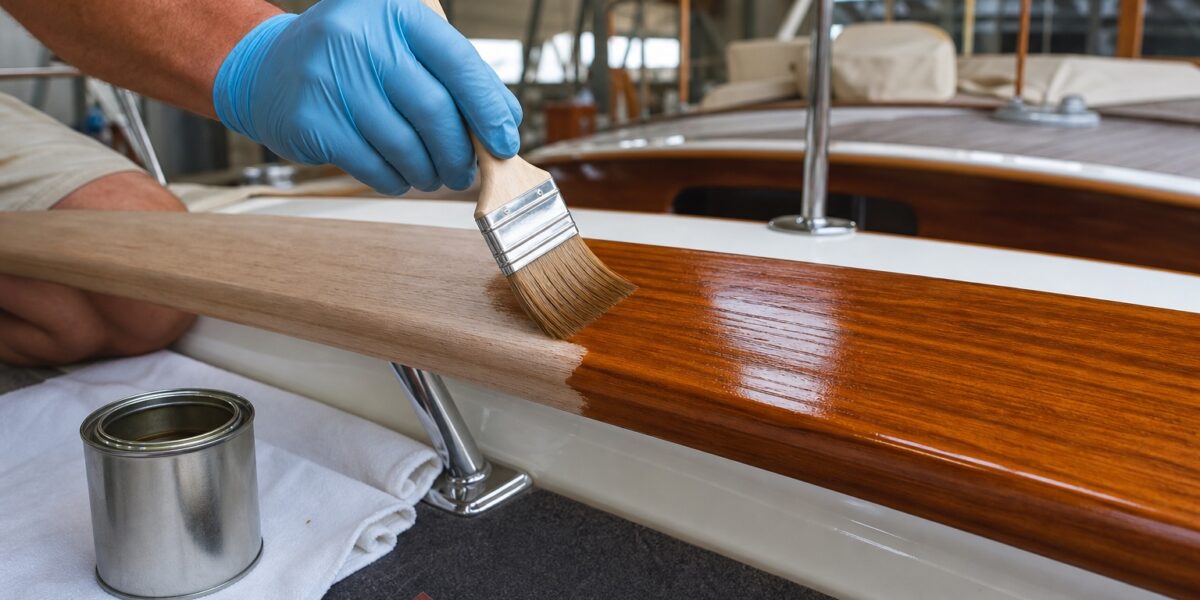
The best marine varnish is the one whose complete application system fits your wood, existing finish, work conditions and maintenance schedule. A rapid-recoat varnish can shorten a project, a traditional tung-oil varnish can produce a classic amber appearance, and a primer-plus-clear system can suit demanding exterior brightwork. None will perform well over damp, contaminated or failing wood.
This guide compares current manufacturer instructions rather than claiming independent long-term product tests. Specifications were checked in July 2026; always use the current label, technical data sheet and safety data sheet for the exact product you buy.
This article includes affiliate links. We may earn a commission at no extra cost to you.
Best marine varnish by project type
| Product or system | Manufacturer-described type | Published application pattern | Good fit when |
|---|---|---|---|
| Epifanes Clear Varnish | Traditional tung-oil, phenolic-modified alkyd varnish | Brush, roll or spray; dry in 12 hours and recoat in 24 hours at 65°F | You want a classic high-gloss amber finish and can allow daily recoating |
| International Schooner | Traditional tung-oil gloss yacht varnish | On bare wood, one thinned coat followed by 4–6 full coats; sand between coats | You need a published system for teak, iroko or other marine woods |
| TotalBoat Lust | One-part, rapid-recoat spar varnish | 6–8 coats minimum; up to five coats per day at 72°F; no sanding within its recoat window | Project speed and multiple same-day build coats matter |
| TotalBoat Gleam | One-part marine spar varnish | 4–6 coats minimum; up to three coats per day; gloss build coats with satin only as final coats | You prefer a slower, more forgiving schedule than Lust |
| Pettit Captain’s Varnish 1015 | Traditional spar varnish using phenolic and alkyd resins with tung and linseed oils | Use the current product data sheet for surface preparation, thinner and recoat details | You want a traditional warm amber appearance from a current marine-paint line |
| Awlgrip Awlwood Primer and Clear | Primer plus one-pack clear exterior system | Awlgrip lists eight clear coats by brush, roller or spray | You want a fast-curing, repairable professional-oriented system rather than a traditional single can |
This is a use-case comparison, not a laboratory ranking. Product chemistry, number of coats and recoat windows differ, so do not combine figures from one manufacturer with another product.
What does “marine varnish” mean?
Marine varnish is a transparent coating system intended to protect and display wood in a marine environment. Traditional products commonly combine drying oils, resins, solvents, driers and ultraviolet-protection additives. Modern systems may use different resins or separate primers and clear coats.
The term does not mean the finish is suitable for continuous immersion. The products compared here are intended for interior or exterior wood above the waterline, subject to each manufacturer’s limits. They are not bottom paint, underwater epoxy or a universal clear coat for fiberglass.
How the leading systems differ
Epifanes Clear Varnish: traditional daily-recoat system
Epifanes describes Clear Varnish as a traditional marine varnish based on tung oil and phenolic-modified alkyd resins with ultraviolet absorbers. It is intended for interior and exterior marine wood above the waterline and can be brushed, rolled or sprayed. The manufacturer lists a 12-hour dry time and 24-hour recoat time at 65°F.
Epifanes also publishes complete wood-finishing systems. Its guidance emphasizes additional coats for flat horizontal surfaces and high-ultraviolet environments, and maintenance coats before an intact finish cracks or separates.
Choose it when: the traditional high-gloss appearance is the goal and a one-coat-per-day schedule is workable. Use the manufacturer’s wood-specific system rather than a universal coat count.
International Schooner: traditional varnish with detailed wood preparation
International’s technical data sheet identifies Schooner as a traditional tung-oil high-gloss yacht varnish with ultraviolet filters. It is suitable for interior and exterior use on wood, including oily timbers such as teak and iroko.
For bare wood, International specifies sanding through the appropriate grades, applying the first coat thinned 10 percent with its designated Thinner No. 1, then applying another 4–6 full coats. The sheet calls for sanding between coats with 320–400 grade paper. At 77°F, the minimum overcoat time is 12 hours; temperature changes that window.
Choose it when: you want a classic warm finish and its documented preparation and recoat schedule suits your shop conditions.
TotalBoat Lust: rapid build coats
TotalBoat Lust is a one-part linseed-oil-modified polyurethane spar varnish available in high gloss and matte. Its current technical sheet specifies 6–8 coats minimum, 360–400 square feet per gallon at a 3-mil wet film, and a one-hour minimum recoat at 72°F. Up to five coats can be applied in a day, and sanding is not required when recoated within 48 hours.
Those time savings depend on film thickness and temperature. TotalBoat warns that coats thicker than the specified wet film can trap solvent and remain soft. It also directs users to build with Lust High Gloss; Matte is for the final one or two coats.
Choose it when: you can control temperature, film thickness and timing closely enough to take advantage of multiple same-day coats.
TotalBoat Gleam: a slower rapid-recoat alternative
TotalBoat Gleam is another one-part spar varnish, offered in gloss and satin. Its current sheet specifies 4–6 coats minimum and permits up to three coats per day. At 80°F the minimum recoat time is one hour, while cooler conditions lengthen it. Sanding is not required when recoated within 48 hours.
As with Lust, gloss is used for seal and build coats; satin belongs only in the final one or two coats. The company recommends annual maintenance coats for exterior exposure.
Choose it when: you want a published same-day build schedule but prefer fewer daily coats and a more conventional working pace.
Pettit Captain’s Varnish 1015: traditional warm amber finish
Pettit describes Captain’s Varnish 1015 as a high-performance spar varnish combining phenolic and alkyd resins with tung and linseed oils. It is designed for a warm amber appearance, gloss retention and a flexible finish. Pettit provides separate product and safety data sheets plus an application guide.
Choose it when: a traditional marine-paint brand and warm classic appearance are priorities. Confirm the current coat, thinner, temperature and recoat instructions from the data sheet rather than relying on a retailer summary.
Awlwood Primer and Clear: a complete exterior system
Awlgrip’s Awlwood system uses a penetrating exterior primer followed by Awlwood Clear Gloss. The manufacturer describes the clear as a one-pack, fast-curing, repairable finish for exterior wood above the waterline and lists eight clear coats by brush, roller or spray.
This is not a direct one-can substitute for traditional spar varnish. Price and plan the required primer, clear coats, reducers, tools and repair procedure as one compatible system.
Choose it when: a professional-oriented primer-and-clear system fits the project and the applicator can follow its complete technical documentation.
One-part versus multi-part or system finishes
One-part varnishes cure without adding a separate hardener. They are generally easier to mix, touch up and maintain. A two-component build coat or dedicated primer-and-clear system can offer a different application speed or film structure, but demands tighter compatibility and process control.
Never assume that a harder system is automatically better for every wooden part. Wood moves with moisture and temperature, existing coatings may be incompatible, and a rigid or poorly bonded film can fail. If you do not know what is already on the wood, identify it or remove it before choosing the replacement system.
Gloss, satin or matte?
- Gloss: provides the clearest view of the grain and is commonly used for exterior build coats because manufacturers formulate it without flattening agents.
- Satin or matte: reduces reflected glare and can suit interior joinery, but many product systems specify it only for the final coat or two.
- Do not build with a satin product when the technical sheet directs you to build with gloss. Multiple layers of flattening agent can reduce clarity and produce an uneven appearance.
Surface preparation: the step that determines the finish
Previously varnished wood in good condition
- Wash away salt and contamination using a cleaner compatible with the coating system.
- Inspect for loss of adhesion, cracks, black staining, moisture intrusion and soft wood.
- Degrease and sand using the exact grades in the manufacturer’s instructions.
- Remove dust without contaminating the surface with an incompatible solvent or tack cloth.
- Apply maintenance coats before ultraviolet damage reaches bare wood.
Failed or unknown finish
When the coating is peeling, deeply cracked, cloudy from moisture or poorly bonded, adding another coat will not repair it. Remove failed material to a sound edge or back to bare wood as the manufacturer directs. Repair rot, open joints and hardware leaks before refinishing.
Bare wood
Sand with the grain, round sharp edges enough to hold film and remove all dust. Oily species such as teak and iroko may require a product-specific solvent wipe or timing sequence. Follow the chosen system’s sealing instructions: Schooner specifies a 10-percent-thinned first coat, while TotalBoat Lust permits much greater first-coat reduction with its designated thinner. These figures are not interchangeable.
Our boat-renovation guide covers the larger repair sequence, while the boat-paint guide explains where opaque paint may make more sense than preserving clear brightwork.
Application conditions and technique
- Read the technical and safety data sheets before opening the container.
- Work in a clean, dry and well-ventilated area within the product’s temperature and humidity range.
- Avoid direct sun, falling dew, rain, dust and windblown contamination.
- Decant only the amount needed into a clean working container so the main can stays uncontaminated.
- Use the specified brush, roller, spray equipment and thinner.
- Apply the stated wet-film thickness and maintain a wet edge; extra-thick coats do not create a shortcut.
- Respect both minimum and maximum recoat windows.
- Sand only when and with the grit the manufacturer specifies.
For larger flat areas, some manufacturers permit rolling followed immediately by tipping with a clean brush. That does not make every foam roller, brush or solvent compatible with every varnish.
How many coats of marine varnish are required?
There is no universal “six coats” rule. The required system depends on the product, bare versus previously varnished wood, wood porosity, ultraviolet exposure and desired finish.
- International Schooner specifies a thinned first coat plus 4–6 full coats on bare wood.
- TotalBoat Gleam specifies 4–6 coats minimum.
- TotalBoat Lust specifies 6–8 coats minimum.
- Awlgrip lists eight Awlwood Clear coats over the proper primer system.
- Epifanes publishes different complete systems and recommends more coats in severe ultraviolet exposure.
Use the selected manufacturer’s full schedule from first seal coat through maintenance. Do not stop when the wood merely looks glossy if the protective film has not reached the specified build.
How much varnish should you buy?
- Measure the surface area of every face and edge to be coated.
- Multiply by the total number of full coats in the chosen system.
- Divide by the manufacturer’s practical coverage figure.
- Add the sealer or primer requirement and a reasonable allowance for loss.
- Purchase compatible thinner, strainers, brushes, abrasives, gloves and cleaning materials.
Coverage is tied to film thickness. Stretching a can beyond the technical sheet may leave inadequate protection; applying too much can cause runs, solvent entrapment or slow curing.
Safety and disposal
Marine varnishes and thinners can contain flammable solvents and substances requiring respiratory, skin and eye protection. Use the personal protective equipment and ventilation specified in the safety data sheet. Keep materials away from sparks, flames and ignition sources.
Some varnish-soaked rags and waste can heat and ignite as drying oils oxidize. TotalBoat’s current Lust sheet instructs users to place soaked rags, steel wool and waste immediately in a sealed, water-filled metal container. Follow the exact product label and local hazardous-waste requirements; never leave oily rags piled in a boat, shop or trash can.
Maintenance: recoat before failure
Inspect exterior brightwork frequently for loss of gloss, thinning at edges, small cracks and water entry near hardware. When the film is still intact, cleaning, light preparation and maintenance coats are far less work than stripping failed varnish.
Exposure differs dramatically between a shaded cabin interior and a horizontal handrail in tropical sun. Treat annual maintenance language as an inspection trigger, not a promise that every finish lasts exactly one year. Clean brightwork with a mild compatible boat soap and avoid abrasive cleaners unless the manufacturer approves them.
Marine varnish decision checklist
- Is the wood interior or exterior, and always above the waterline?
- What species is it, and is it oily?
- Is the current coating intact, failed or unknown?
- Do you want a traditional amber tone or a different clear system?
- Can your workspace meet the temperature, humidity and ventilation limits?
- Can you follow the full coat and recoat schedule?
- Does the final sheen require gloss build coats?
- Are every primer, thinner and topcoat explicitly compatible?
- How will you inspect and maintain the finish before it fails?
For a traditional gloss with a daily rhythm, compare Epifanes Clear and International Schooner. For rapid same-day build coats, compare TotalBoat Lust and Gleam using their different film and timing requirements. For a traditional Pettit system, consult the current Captain’s Varnish documents. For a professional primer-and-clear approach, evaluate the complete Awlwood system. The best marine varnish is the system you can prepare, apply and maintain exactly as documented.




Stay in the loop
Get the latest power and motor yacht central updates delivered to your inbox.