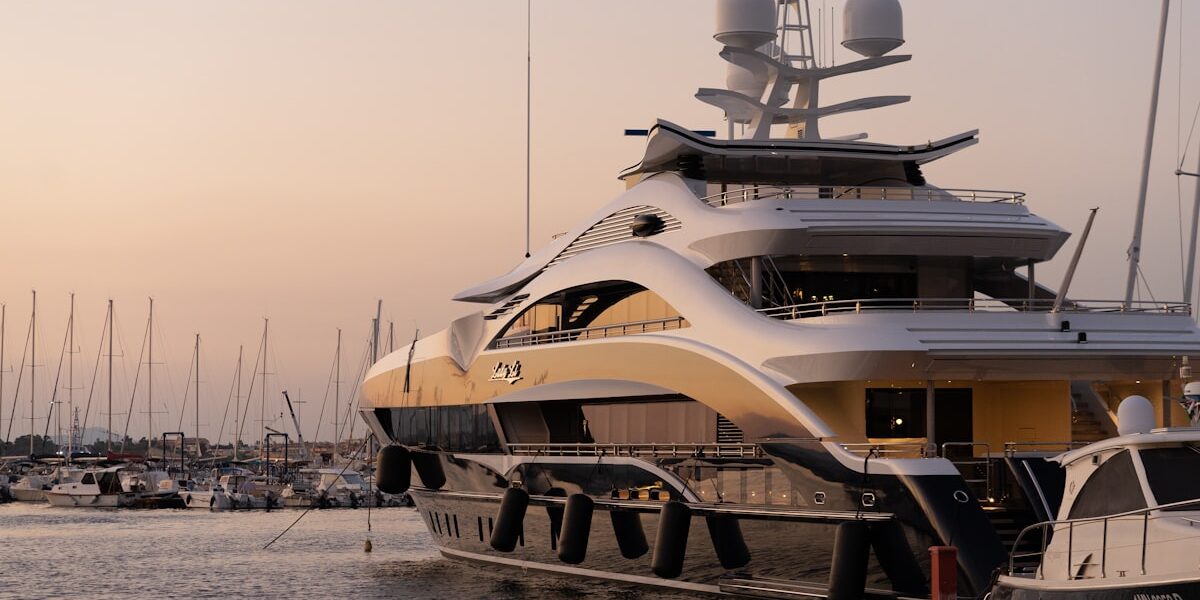
Semi-displacement hull design has gotten complicated with all the competing claims about speed and efficiency flying around. As someone who has logged thousands of miles at 12 knots on these versatile platforms, I learned everything there is to know about the middle ground between fast planing boats and slow trawlers. Today, I will share it all with you.
What Semi-Displacement Actually Means
Pure displacement hulls can’t exceed hull speed—they simply push more water aside as you add power, hitting a wall. Planing hulls climb onto the water’s surface, dramatically reducing wetted area and enabling much higher speeds.
Semi-displacement designs do both, depending on throttle setting. At low speeds, they behave like displacement hulls. As speed increases, the hull partially lifts, reducing drag without fully planing. This transitional behavior enables a wide range of efficient operating speeds that neither pure design can match.
Why 12 Knots Matters
That’s what makes the 12-knot sweet spot endearing to us coastal cruisers—the balance between covering ground and burning fuel efficiently.
Most semi-displacement hulls achieve optimum efficiency between 10-14 knots. Below this range, you’re not taking advantage of the hull’s lifting ability. Above it, fuel consumption increases disproportionately to speed gains.
At 12 knots, a well-designed 45-foot semi-displacement cruiser might burn 8-12 gallons per hour—roughly twice what a full displacement vessel burns at 8 knots, but covering 50% more distance in the same time. The math often favors semi-displacement for typical coastal cruising patterns.
Understanding the Hull Design
Probably should have led with this section, honestly.
Semi-displacement hulls share identifying features that experienced buyers recognize. Moderate deadrise angles—typically 10-15 degrees at the transom—provide some lift while maintaining soft ride characteristics. Fine bow entries reduce slamming in head seas.
Chine design matters significantly more than most people realize. Hard chines that transition to soft chines moving aft help the hull lift efficiently. Some designs incorporate spray rails that direct water away from the hull, reducing drag at cruising speeds noticeably.
Stern sections are typically wider and flatter than displacement designs, providing the lifting surface that enables semi-planing operation when you push the throttles forward.
The Flexibility Advantage
Unlike planing hulls that feel awkward at displacement speeds or displacement hulls that struggle to exceed hull speed, semi-displacement boats operate comfortably across a genuinely wide speed range.
Need to maximize range on a long passage? Slow to 8 knots and operate in displacement mode efficiently. Want to make time on a calm day? Push to 14-16 knots and take advantage of the hull’s lifting ability without guilt. This flexibility suits cruising patterns that vary with conditions, schedules, and fuel availability.
Comfort at Speed
Semi-displacement hulls typically provide comfortable motion in moderate conditions. The heavier displacement compared to planing boats creates slower roll periods that passengers appreciate. The lifting bow sections reduce pitching motion compared to full displacement designs.
At higher speeds in rough water, semi-displacement boats may pound more than their slower-running displacement cousins—this is the honest trade-off. The partial lifting that enables speed also means more hull surface meets oncoming waves with force.
Active stabilization systems have become popular on semi-displacement cruisers for good reason. Gyroscopic stabilizers or fin systems reduce roll dramatically, improving comfort at all speeds when conditions deteriorate.
Power Requirements
Semi-displacement boats need more power than full displacement vessels of similar size—typically 15-25 HP per ton of displacement compared to 4-8 HP per ton for displacement designs. The math isn’t close.
Twin engines are standard equipment on most semi-displacement cruisers. The redundancy suits coastal cruising where assistance is reasonably available, and the additional power enables the speed range that defines the category.
Diesel engines dominate for their efficiency and reliability over gasoline alternatives. Turbocharged engines provide the power density needed without excessive weight penalty.
Range Reality
Fuel capacity on semi-displacement boats typically provides 400-600 mile range at cruise speed. This suits coastal cruising with reasonable port spacing perfectly but falls short of ocean crossing capability for those with bigger ambitions.
Extended-range versions with additional tankage exist for owners planning longer passages between fuel stops. The trade-off is increased weight that affects both speed and handling—nothing comes free.
Builders Who Do It Well
Grand Banks, Fleming, and Nordhavn all produce respected semi-displacement designs that have earned their reputations. These builders have refined the concept over decades, optimizing hull forms for specific speed ranges and use cases.
European builders like Beneteau and Jeanneau offer semi-displacement designs with contemporary styling at lower price points. The underlying hull concepts remain similar despite different market positioning and finish levels.
Where Semi-Displacement Excels
Coastal cruising with moderate distances between stops suits semi-displacement boats perfectly. The ability to cover 200 miles in a reasonable day while maintaining fuel efficiency and comfort matches how most cruisers actually travel.
Owners who want options—the ability to slow down and save fuel or speed up when conditions permit—appreciate the flexibility that single-purpose designs simply can’t match.
My Take
At 12 knots in comfort, semi-displacement boats deliver on their promise. They won’t match the long-range capability of full displacement cruisers or the speed of true planing boats, but for many owners, the balanced performance represents exactly what they need for how they actually use their boats. Sometimes the middle ground is precisely the right ground—that’s certainly been my experience.

Stay in the loop
Get the latest power and motor yacht central updates delivered to your inbox.