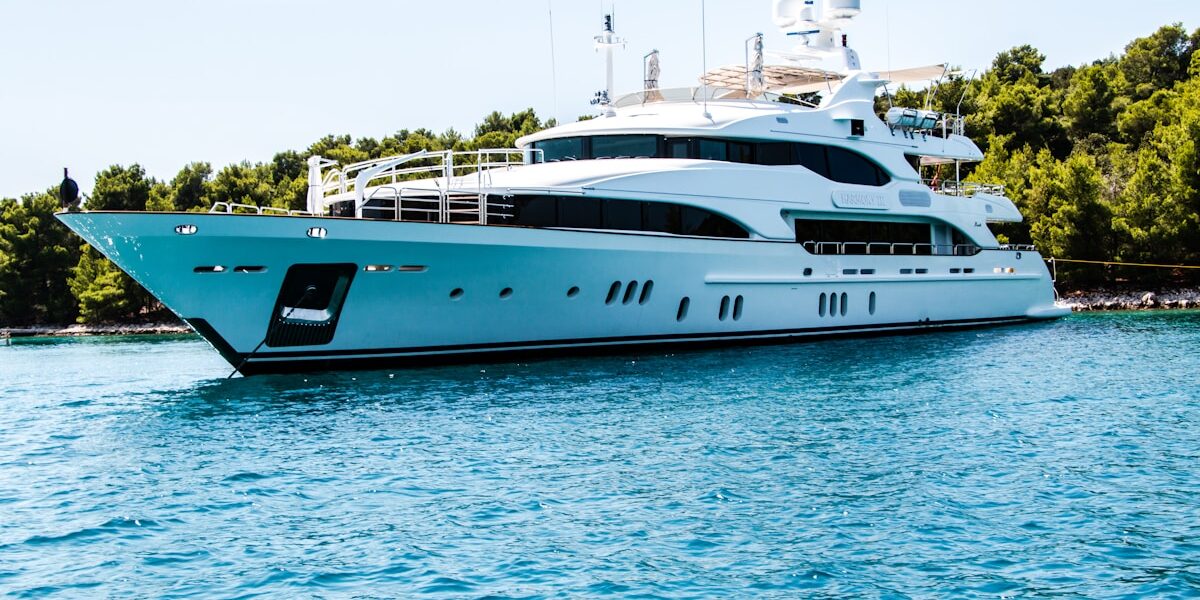
Deep-V hull angles have gotten complicated with all the competing claims and marketing numbers flying around. As someone who has run offshore in conditions that tested hull design thoroughly, I learned everything there is to know about why 24 degrees at the transom matters for rough-water performance. Today, I will share it all with you.
What Deadrise Actually Means
Deadrise is simply the angle between the hull bottom and a horizontal plane, measured at any point along the hull. Most discussion focuses on transom deadrise because that’s where the primary planing surface exists on running boats.
Higher deadrise means a sharper V-shape. Lower deadrise means a flatter bottom. The trade-offs are fundamental to hull design: sharp V shapes slice through waves but require more power and sacrifice stability at rest. Flat bottoms are stable and efficient but pound violently in rough water.
Why 24 Degrees Became the Standard
That’s what makes the 24-degree angle endearing to us offshore boaters—the sweet spot that naval architects settled on after decades of refinement.
Through years of testing and real-world experience, designers established roughly 24 degrees as the ideal balance for offshore performance boats. This angle provides genuine rough-water capability without excessive power requirements or unacceptable stability compromises.
Boats with less than 20 degrees of deadrise feel the difference immediately in choppy conditions—they pound, jar, and transmit wave impact directly to crews and passengers. Boats with more than 24-25 degrees require significantly more power and may feel tippy at rest or slow speeds.
How Deep-V Hulls Handle Waves
Probably should have led with this section, honestly.
When a wave strikes a deep-V hull, the sharp entry splits the water rather than slamming into it. The impact force spreads over time as the hull progressively meets the wave. This transformation of sudden impact into gradual loading is what makes deep-V hulls comfortable offshore.
The physics work best at speed. A deep-V hull running into steep head seas might feel firm, but the alternative on a flatter hull would be violent pounding that’s both uncomfortable and structurally damaging.
Following seas present different challenges, but the sharp stern sections of deep-V designs typically track well and resist the squirrely behavior that can affect flatter hulls when waves approach from behind.
Variable Deadrise Design
Most hulls feature variable deadrise—sharper at the bow, flatter at the stern. This design approach captures multiple benefits: the sharp bow sections cut through waves while flatter stern sections provide efficient planing surfaces.
Entry angles of 50-60 degrees at the bow are common on serious offshore hulls. These extreme forward sections handle the initial wave contact, with the hull gradually flattening toward the 24-degree transom.
When You Don’t Need 24 Degrees
Not every boat needs the full offshore treatment. Modified-V hulls with 16-20 degrees of deadrise suit protected waters perfectly and prioritize stability and efficiency over rough-water performance that won’t be needed.
Catamaran hulls sidestep the whole discussion with completely different geometry. Their wide stance and wave-piercing designs offer an alternative path to rough-water performance.
Speed Changes Everything
Deep-V hulls perform best at speed—the sharp entry does its job when moving fast enough to generate significant dynamic lift. At slow speeds or at rest, these hulls may feel tender (tippy) because the V-shape concentrates weight on a narrow ridge.
Some builders address this with reverse chines or lifting strakes that provide additional stability at rest without compromising running performance. These hybrid features let deep-V hulls feel more secure at anchor.
Construction Quality Matters
Building a proper deep-V hull requires serious engineering that not every builder delivers. The sharp angles concentrate stress, and offshore impacts load the structure repeatedly throughout each trip. Quality construction uses appropriate core materials, adequate laminate schedules, and proper structural frameworks.
Production boats often feature deep-V shapes without the structural robustness to handle genuine offshore conditions. The hull looks capable but may not survive the abuse it promises to handle. Research carefully.
Verifying Claims
Not every manufacturer measures or reports deadrise accurately. Some quote forward sections rather than transom angles. Others round up optimistically for marketing purposes.
If rough-water performance matters to you, verify deadrise claims with actual measurements or independent reviews from credible sources. Better yet, sea trial in conditions that actually test the hull’s capabilities.
The Weight Factor
Heavier deep-V boats typically ride better than lighter ones of similar design. Weight helps the hull settle into the water and absorb wave energy rather than skipping across it. Extremely light deep-V hulls may skip and bounce in ways that heavier versions of the same design wouldn’t.
This relationship partly explains why offshore fishing boats carry significant weight in fuel, water, and equipment—beyond practical necessity, that weight contributes to ride quality in meaningful ways.
Making Your Choice
Match deadrise to your actual boating conditions honestly. Weekend bay boaters don’t need 24-degree hulls—the efficiency and stability penalties won’t be offset by rough-water benefits they’ll rarely use.
Serious offshore anglers, long-distance cruisers, and anyone who regularly faces challenging conditions benefits from genuine deep-V performance. The 24-degree hull costs more to build, requires more power, and sacrifices some efficiency, but when the seas build, it earns every compromise you made to have it. I’ve been grateful for mine more times than I can count.

Stay in the loop
Get the latest power and motor yacht central updates delivered to your inbox.