Why Below Deck Cast Fans Never Stop Searching
If you’ve typed “below deck cast where are they now” into Google at 11pm on a Tuesday while rewatching a Season 3 episode, you’re not alone — and honestly, you’re in good company. I’ve been covering the yacht industry professionally for years, and Below Deck remains the single most-asked-about show among people who actually work on or charter boats. There’s something about this franchise that sticks. Maybe it’s the confined drama of a superyacht. Maybe it’s watching people do genuinely skilled jobs while also completely losing their minds at crew dinners. Either way, twelve seasons in, the cast questions don’t slow down.
Below Deck premiered on Bravo in July 2013 with a simple premise — follow the crew of a luxury charter yacht through a season — and somehow turned into a franchise with six spinoffs, international editions, and a devoted fanbase that tracks former crew members like they’re monitoring AIS vessel data. The original show, the Mediterranean edition, the Sailing Yacht spinoff, Down Under, Adventure — at this point we’re talking about hundreds of crew members who have passed through those cabins and stairwells.
This article is the hub. We cover where the major cast members landed, what they’re doing in 2026, and — because we cover yachting as an industry and not just as entertainment — we also dig into what happened to the actual boats. That maritime angle is something entertainment sites consistently miss. People.com will tell you Kate Chastain appeared on a podcast. We’ll tell you the full picture of where this franchise’s people and vessels ended up.
Captain Lee Rosbach — Where Is He Now
Captain Lee Rosbach, the man who called himself “the Stud of the Sea” without a trace of irony and somehow made it endearing, is arguably the most recognized figure the franchise ever produced. His departure from Season 10 mid-charter due to serious health issues — foot complications requiring surgery — marked one of the most emotionally raw moments in the show’s run. He returned briefly but stepped away from active filming, and the question of his current status is searched thousands of times each month.
We have a full, dedicated article covering Captain Lee’s trajectory in detail — his health updates, his memoir Running Against the Tide, his relationship with the franchise post-departure, and whether he still works in the yachting industry. Read our complete Captain Lee — Where Is He Now feature here. The short version: he has remained publicly engaged with fans, does speaking appearances, and has been transparent about prioritizing his health over returning to active captaining. He’s the kind of figure who could step back into a wheelhouse tomorrow if his body allowed it. Whether it does is something we cover in depth in that article.
What I’ll add here that doesn’t always make the entertainment coverage: Captain Lee came up through the legitimate yachting industry before cameras existed. He held a USCG 100-ton Master license and worked charters in Florida long before Bravo knew what a superyacht was. That background is why he commanded genuine respect from actual maritime professionals, not just Bravo viewers. His story after Below Deck is inseparable from that history.
Captain Sandy Yawn — The Franchise’s Other Pillar
Captain Sandy Yawn joined Below Deck Mediterranean in Season 2 (2017) and became one of the most polarizing — and durable — figures the entire franchise produced. People either find her management style inspiring or infuriating. Probably should have opened with this section honestly, because Sandy’s current activity level makes Captain Lee’s look quiet by comparison.
In 2026, Sandy is still one of the most professionally active alumni the show has produced. She holds a 3,000-ton Master Mariner license — not a detail that entertainment sites bother with, but it matters enormously in the maritime world because it represents one of the highest levels of civilian maritime certification available. She didn’t just play a captain on television. She’s the real thing, and she’s continued building on that in the years since her most prominent seasons.
Sandy launched her own leadership and motivational speaking platform after her highest-profile Mediterranean seasons. She has delivered keynote addresses at maritime industry conferences — not just general business events — specifically targeting women in professional maritime roles. She co-authored leadership content and has been publicly vocal about addiction recovery, sobriety advocacy, and mental health, subjects she discussed openly during her time on the show. In 2024 and into 2025, she appeared at several women-in-yachting panels at events in Antibes and Fort Lauderdale, which the yachting trade press covered, even when the entertainment press didn’t. She’s also been linked to a Below Deck production return in a consulting capacity, though her on-screen role has evolved significantly from the hands-on captain she was in early Mediterranean seasons.
Kate Chastain — From Chief Stew to Media Personality
Kate Chastain was the chief stew who made table napkin folding feel like performance art and eye-rolling feel like an Olympic sport. She left Below Deck after Season 7 in 2020, and the transition she made afterward was genuinely one of the more interesting career pivots any Below Deck alumnus has pulled off.
Trained by the experience of managing interior crews on yachts valued north of $20 million, Kate moved firmly into media. She joined Bravo’s Chat Chat as a co-host, became a regular on Watch What Happens Live with Andy Cohen, and established herself as the go-to talking head for Below Deck commentary whenever Bravo needed someone who actually understood what they were watching. She wrote a memoir — Lucky: How I Survived Stalkers, Weird Jobs, Awful Dates, and Other Disasters — published in 2020, which charted her life before and through her yachting career.
In 2026, Kate is operating primarily as a media personality and content creator. She has a podcast presence, maintains an active social media following in the hundreds of thousands, and does brand partnerships that skew toward travel and lifestyle — a natural extension of a career spent on luxury vessels in the Mediterranean and Caribbean. What she hasn’t done is return to working yachts professionally, which is a choice, not a limitation. She’s been candid in interviews that the chief stew lifestyle is brutal in ways the cameras only partially capture — fourteen-hour days, no personal space, guests who think $200,000 for a week’s charter means they can demand anything at any hour. She’s not going back. And honestly? Good for her.
Hannah Ferrier — Below Deck Med After the Show
Hannah Ferrier’s exit from Below Deck Mediterranean Season 5 remains one of the most discussed departures in the franchise’s history. She was let go mid-season after Captain Sandy reported to the boat’s captain agent that Hannah possessed an undeclared Valium prescription and a CBD pen — a serious protocol issue on a commercially certified vessel, regardless of the circumstances or personal feelings about the substances involved. The yacht industry has strict rules about undeclared medications, and those rules exist for real maritime safety reasons. That context got lost in a lot of the entertainment coverage, which framed it purely as interpersonal conflict.
Dismissed by the circumstances of her exit, Hannah redirected her energy into something most people didn’t predict: she became a genuinely successful entrepreneur and content creator focused on motherhood and lifestyle rather than anything yacht-related. She married her partner Josh Roberts in 2021 and has two children. Her social media presence shifted almost entirely away from yachting and toward family life, parenting content, and Australian lifestyle content — she’s based in Sydney.
She launched an online platform and digital content business, runs a podcast called Dear Diary, You’re Kidding focused on motherhood and personal stories, and has done brand partnerships in the parenting and wellness space. She’s notably absent from the yachting industry conversation at this point, which given how she left probably isn’t a surprise to anyone. In interviews, she’s been measured but honest about her Below Deck experience — proud of the work, complicated feelings about the ending, clear that she’s moved on. She also briefly appeared on the short-lived Below Deck Down Under in a guest capacity, which suggested she hadn’t entirely closed the door, but she hasn’t returned to any ongoing role in the franchise.
Chef Ben Robinson — The Galley Legend’s Current Projects
Ben Robinson was the chef who made you want to eat everything he described even through a television screen, and who had the kind of on-camera charisma that made food content feel inevitable for him post-show. He appeared across multiple Below Deck seasons — the original and Mediterranean — and was consistently one of the most competent, entertaining crew members the franchise produced.
Post-Below Deck, Ben leaned hard into the culinary content space. He launched his own food and travel platform, has done private chef work for high-net-worth clients (the kind of work that doesn’t show up on Instagram because the clients pay specifically to avoid that), and has worked on cookbook development. He’s participated in charity culinary events, appeared on cooking-adjacent television programming, and maintained a presence in the yacht industry through private charter chef engagements — the kind of seasonal high-season work in the South of France and Caribbean that pays extraordinarily well if you have the reputation to command it, which he does.
He also launched a line of culinary products and has done collaboration work in the food and beverage space. What’s interesting from a maritime angle is that Ben represents a career path that more professional yacht chefs are trying to replicate — use the television exposure to build a personal brand that doesn’t require you to spend nine months a year in a galley the size of a large closet. A superyacht galley on a 150-foot vessel might measure 180 square feet on a good day. Ben cooked extraordinary food in conditions that professional shoreside chefs would refuse on principle. Building a platform on that credibility makes complete sense.
Other Fan-Favorite Crew Updates
Deckhand Eddie Lucas
Eddie Lucas became one of the longer-running crew members in the franchise’s history, appearing in Season 1, Season 2, and returning for Season 8. He worked as a professional mariner between seasons — not something every cast member can say — and held legitimate maritime certifications that he built on during and after the show. As of the most recent reporting, Eddie has remained connected to the maritime industry in a professional capacity rather than pivoting to media work. He’s one of the quieter alumni in terms of public profile, which tracks with his personality on screen.
Rocky Dakota
Season 3 deckhand Rocky Dakota — born Raquel Donat — generated some of the most chaotic television the original show ever produced. Post-Below Deck, she pursued music and creative work, which she had discussed as a primary passion during her time on the show. Her Below Deck tenure was short and stormy, but her search volume remains significant, which says something about the power of making a memorable television impression even in a limited run.
Joao Franco
Joao Franco from Below Deck Mediterranean built a meaningful post-show presence as a yachting industry commentator and content creator. He’s been open about personal growth since his seasons aired — he was not universally beloved by viewers during his run — and has done work in the maritime training and education space. He represents something genuinely interesting: a cast member who used the platform to establish credibility within the actual yachting industry rather than departing from it entirely.
Chef Mila Kolomeitseva
Mila Kolomeitseva’s Below Deck Mediterranean Season 4 run was brief and notorious — she’s best remembered for serving guests uncooked chicken and claiming professional credentials she apparently hadn’t earned. She’s the cautionary tale that professional yacht chefs reference when discussing what happens when a commercial charter vessel hires incorrectly. She largely disappeared from public view after her departure, which is probably the appropriate outcome.
The Below Deck Yachts — Where Are the Boats Now
This is the section that entertainment outlets skip entirely and that we’re not going to skip, because if you actually follow the yacht industry, the boats are half the story.
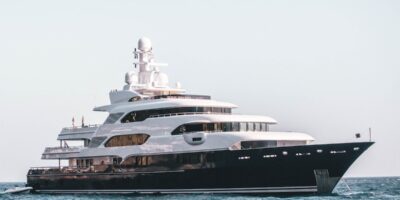
The original Below Deck series filmed on several vessels across its twelve seasons. The Honor, the 164-foot vessel used in early seasons, continued operating as a charter yacht in the Caribbean and Mediterranean market after filming. Charter vessels of that class — built in the late 1990s and early 2000s, typically aluminum or steel hull construction, with interior refits costing $2 million to $5 million depending on scope — have working lives of thirty or forty years when properly maintained. They don’t retire when their television appearances end.
The Eros, another early-season vessel, similarly continued in the commercial charter market. These yachts list on brokerage platforms like YachtCharterFleet and Burgess Yachts at weekly base rates typically ranging from $95,000 to $175,000 depending on season, region, and current refit status. A television appearance, counterintuitively, doesn’t necessarily increase or decrease charter demand — what matters to serious charter clients is the crew, the itinerary, and the vessel’s technical specification sheet.
Below Deck Mediterranean has used vessels in the 150-to-180-foot range operating out of Dubrovnik, Montenegro, Greek island routes, and the Turkish coast. The Wellington, used in Mediterranean Season 5 (Hannah Ferrier’s final season), was a 179-foot motor yacht that continued active charter operations post-filming. Vessels of that size and specification — think twin MTU 16V 2000 M94 diesel engines, beam around 32 feet, guest capacity of twelve in six cabins — represent significant commercial assets that don’t sit idle between productions.
Below Deck Sailing Yacht operates in a different class entirely. The sailing yacht Parsifal III, a 180-foot schooner used in the first two sailing seasons, is one of the largest sailing yachts in regular charter operation in the Mediterranean. Her rig alone — three masts, composite construction, a sail wardrobe that costs more than most people’s houses — makes her a distinctive asset. She charters at rates comparable to motor yachts of similar length.
What happens to Below Deck boats between seasons is straightforward if you understand how charter yachts operate commercially: they go back to work. A 160-foot yacht burning 120 gallons of fuel per hour at cruising speed, with a crew of ten to twelve drawing professional salaries, does not sit at anchor waiting for Bravo to call. The production companies negotiate seasonal charters of the vessel — typically eight to twelve weeks — and the boat’s management company resumes normal charter bookings around the filming window. Some vessels have been sold since their Below Deck appearances, transferred to new flag states, or undergone significant refits that changed their interior configuration substantially from what viewers remember.
The yachts, like the crew, keep moving. That’s the maritime reality behind the television product — and it’s the angle that makes covering Below Deck from inside the yacht industry genuinely different from covering it from a celebrity tabloid desk.
The Below Deck cast’s “where are they now” story is still being written in 2026. Some have stayed in yachting. Some left and built entirely new careers. Some are somewhere in between — doing charter work in high season, creating content in the off-season, building something that the show made possible even if the show itself is behind them. Twelve seasons of television created a lot of lives worth following. We’ll keep following them.

Stay in the loop
Get the latest power and motor yacht central updates delivered to your inbox.